EU Battery Regulation 2027 — What it means for portable espresso machines | PureBarista
Published: March 2025 · Updated: March 2025 · By Marc Hulsman, founder PureBarista
EU Regulation 2023/1542 — the EU Battery Regulation — requires manufacturers of portable electronic devices to make batteries removable and replaceable by end users. The obligation takes effect on 18 February 2027 for all new products placed on the EU market. Portable espresso machines with sealed, non-removable batteries will no longer be legally sellable as new products in the EU after that date.
Official source: EU Regulation 2023/1542, Article 11(1): batteries in portable devices must be "easily removable and replaceable by the end-user" once the obligation enters into force on 18 February 2027. Source: EUR-Lex, eur-lex.europa.eu, 2023.
Why the regulation was introduced
The EU Battery Regulation is part of the European Green Deal and the Circular Economy Action Plan. Its core aim is to reduce electronic waste by extending the lifespan of battery-powered devices. When a battery degrades — typically after 300 to 500 charge cycles, roughly two years of daily use — a device with a sealed battery becomes unusable and is discarded. A device with a replaceable battery continues to function for years longer.
The European Commission estimates that EU households discard over 1.5 billion portable devices per year. A significant portion of this waste is caused by sealed, non-replaceable batteries. The regulation addresses this directly.
What "User-replaceable" actually means
Under Article 11 of Regulation 2023/1542, a battery is considered user-replaceable if it can be removed using commercially available tools, without requiring specialised expertise, and without permanently damaging the device. Batteries held in place by standard screws or magnetic connectors qualify. Batteries that are glued, soldered, or sealed qualify only if the manufacturer provides a documented replacement procedure accessible to end users.
How the main portable espresso machines compare
| Machine | Battery type | EU 2027 compliant |
|---|---|---|
| PureBarista | 7,500 mAh — user-replaceable | Yes |
| OutIn Nano | Sealed | No |
| Conqueco | Sealed | No |
| HiBREW H4C | 18650 — removable | Yes |
| Wacaco Picopresso | No battery (manual) | N/A |
Two machines currently meet the standard: the PureBarista and the HiBREW H4C. The difference is that the PureBarista uses a single 7,500 mAh battery pack that can be swapped in seconds, while the HiBREW uses standard 18650 cells that require more handling.
The OutIn Nano and Conqueco — both popular and well-marketed machines — have sealed batteries and will not comply with the 2027 regulation.
What "User-replaceable" actually means in practice
There's a difference between a battery that is technically removable and one that is genuinely designed to be replaced by the user.
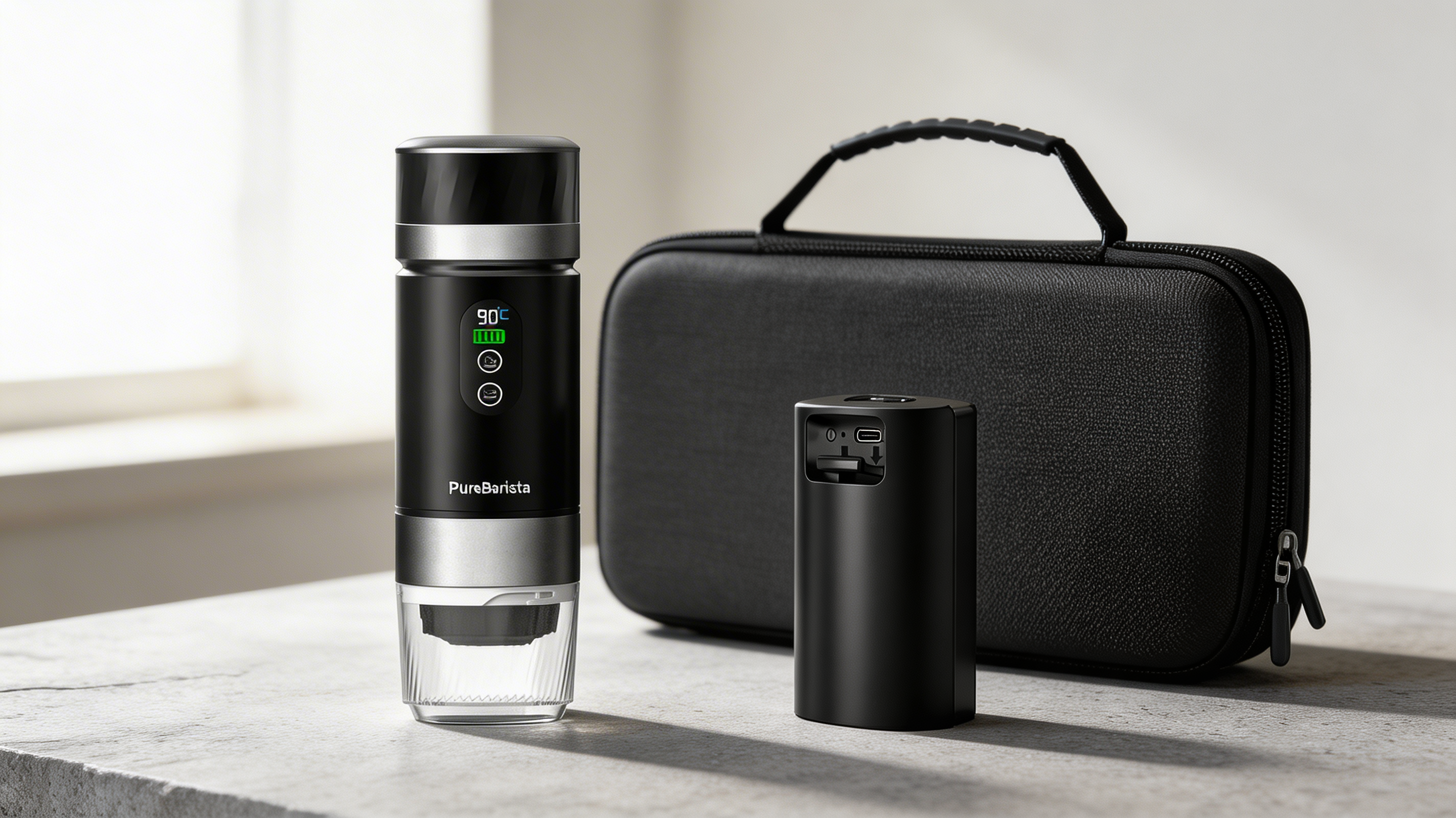
With the PureBarista, replacing the battery takes seconds. The battery slides out from the base of the machine. You insert a new one and continue. No tools, no instructions, no risk of voiding a warranty.
This has a practical benefit beyond compliance: you can carry a spare battery. If you're spending a week camping or travelling without reliable power, you bring a second battery and never run out. That's not something a sealed battery machine — or even a machine with technically removable cells — can offer in the same way.
Buying a portable espresso machine today, what to consider
If you're buying a portable espresso machine in 2025 or 2026, the battery situation should be a primary consideration, not an afterthought.
A sealed battery machine may be cheaper today. But within two to three years, you'll likely be buying another one. Factor that cost in and the price difference disappears quickly.
A replaceable battery machine costs more upfront but is built to last. When the battery eventually degrades, you replace the battery — a fraction of the cost of a new machine. Over four or five years, the economics are straightforwardly better.
There's also the environmental argument. Buying one machine that lasts five years produces significantly less waste than buying two machines in the same period. The EU Battery Regulation exists precisely because regulators recognised this logic.
The PureBarista and EU 2027
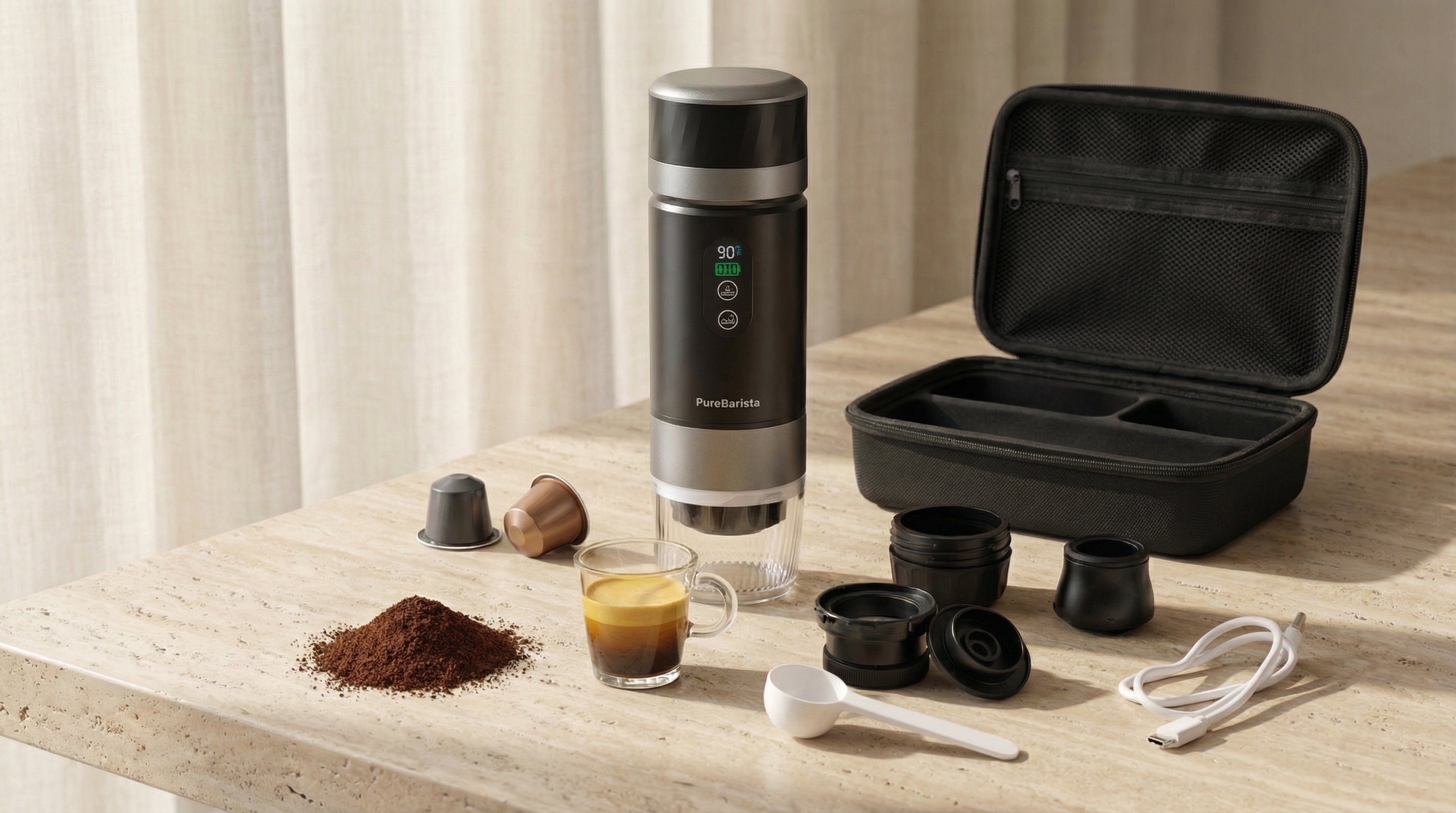
The PureBarista was designed from the start with the EU Battery Regulation in mind. The 7,500 mAh battery is user-replaceable without tools. Extra batteries are available separately. The machine is already compliant — not because the regulation forced a redesign, but because we think products should be built to last.
If you want a portable espresso machine that will still be working properly in 2028, 2029, and beyond, the battery question is the right place to start.
Marc Hulsman — Founder, PureBarista
Marc tests every batch of portable espresso machines himself — measuring warm-up times, extraction pressure, and battery performance. Questions? support@pure-barista.com
Veelgestelde vragen

Written by Marc Hulsman